
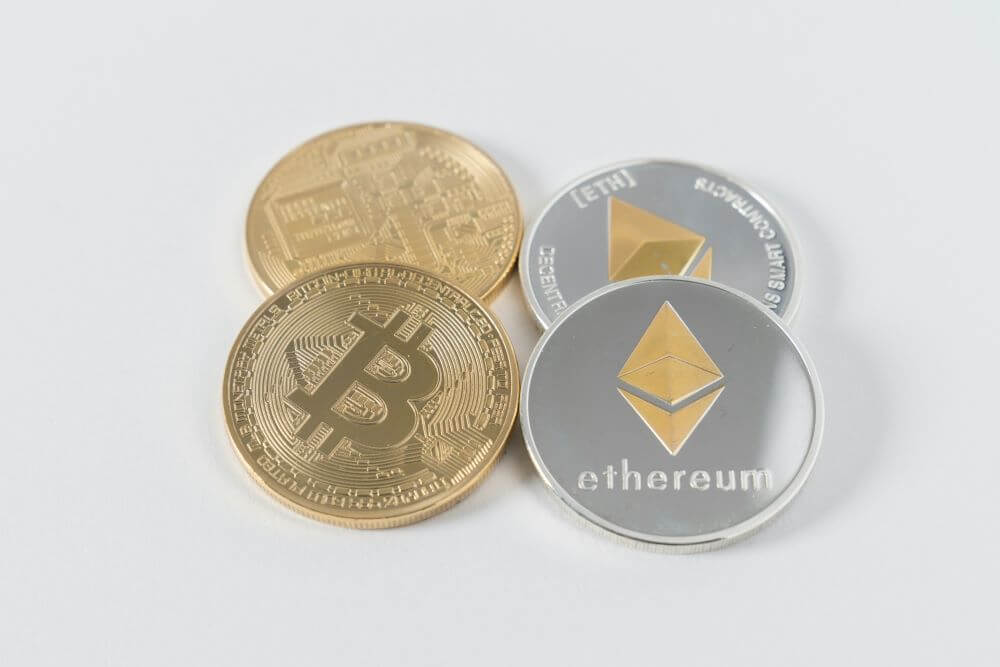
Bitcoin and Ethereum are the two most recognizable names in the crypto space. The two may serve different purposes, but they have one thing in common: they represent beacons of change. When these cryptocurrencies entered the scene, literally no one expected them to shake the financial world to its core, yet they did. And no, this isn’t a whimsical dalliance with cryptocurrency, but a full-scale revolution that we’ve been witnessing for a while.
Bitcoin and Ethereum are no passing fads; they’re here to stay, as they’ve already proven. Even today, people continue to monitor the eth/btc trading pair to gain a deeper understanding of the two giants’ performances, which is quite telling of their enduring popularity. While Bitcoin is the digital gold, Ethereum is the digital silver, and both bring unique features to the financial world.
Bitcoin’s Mission to Change Perceptions of Money Through Decentralization
Before Bitcoin’s advent, the concept of money was tied to central banks or government authority. Fiat money – which is what we use every day- has value because it’s backed by the government. Traditional banks act as intermediaries between savers and borrowers, process payments, and provide wealth management services. But this traditional financial system has many weaknesses that have been revealed over the years, including inefficiencies in costs and time, inflation risks, dependence on institutions, systemic risks, and lack of inclusion. At the same time, there is no doubt that trust is the basis of a financial system, and yet, financial crises, historical scandals, and lack of transparency have shaken many people’s trust in governments and banks.
Bitcoin offers a form of money that operates without centralized control, as the network distributes power among millions of nodes worldwide. No government can manipulate its value or print more Bitcoin; there’s a fixed supply of 21 million, which creates scarcity. This gives people power over their assets without relying on government authorities or financial institutions. And since Bitcoin is based on traceability and transparency enabled by its blockchain technology, each transaction is visible and can be easily verified, resulting in radical openness that builds new trust.
Bitcoin has changed the way people think about money. While we’re familiar with physical money, in the form of paper or coins (or digital but regulated by banks), Bitcoin is digital money but with no physical form and no regulations, which creates opportunities for new forms of cash in the future that feel more aligned with the digital era. This change in perception has fueled broader discussions about the future of money and the role governments will play in the financial system. Many have even started to question whether cash is still relevant today, or if Bitcoin and other cryptos are a better alternative.
In essence, the introduction of Bitcoin into the financial landscape turns the self-image of banks on its head, as their role as custodians of digital assets and payment intermediaries is faltering more and more each day. Institutions are integrating crypto services, investing in blockchain to optimize internal processes, and implementing their own crypto custody solutions. The result? A hybrid financial system where traditional and decentralized networks function hand in hand, and where banks become flexible service providers rather than rulers of financial flows. They are now more like bridge builders, offering risk management, regulatory expertise, and customer advice between the two worlds.
Ethereum: A Core Infrastructure for a Programmable Financial Future
Since its launch in 2015, Ethereum has come a long way, and it’s no longer a simple blockchain. What started as an experiment in programmable money became a foundation for DeFi, smart contracts, tokenized assets, and many on-chain applications. Its design makes it relatively simple for developers to build automated programs that can run independently as soon as they are deployed. What makes Ethereum unique, however, is the energy and size of its developer base, which is by far the largest in the entire crypto ecosystem. Why does this matter? Well, it’s simple: applications have greater utility when they can interconnect: payment platforms integrate with wallets, lending protocols connect with exchanges, and stablecoins move with ease between them.
Notably, Ethereum has received criticism for not scaling well, but the roadmap aims to address this through Layer 2 networks, which serve as parallel highways enabling traffic to move more cheaply and faster without compromising Ethereum’s core security. Alongside upgrades that lower data posting costs, this approach is making Ethereum viable for institutional finance, among other things. Today, money-market funds, treasury bills, and private assets alike are being tokenized and settled on the scaling networks of Ethereum, while regulators have also clarified compliance requirements. As a result, it’s easier for asset managers and banks to get involved. While at the surface, Ethereum may seem to just integrate with existing finance, in reality, it does more than that: it alters its fundamental economics in many ways:
- A settlement that normally takes days can take place in as little as minutes;
- Middlemen that extract fees for custody, clearing, or reconciliation are automated away by smart contracts;
- DeFi protocols give lenders and borrowers direct access to liquidity which competes with banks;
- Tokenized assets can be traded 24/7, peer-to-peer, without using an exchange that keeps exclusive control over order flow.
Will Cash Die Out While Crypto Will Rule By 2030?
It’s true that the use of physical cash is steadily declining worldwide, but it’s unlikely to completely end by 2030. It will, however, look entirely different from what it looks like now, and Bitcoin and Ethereum will be the catalysts behind this revolution. In the future, central banks will likely issue their own crypto, which can coexist with private digital assets, while banks will offer hybrid services mixing traditional and decentralized systems.
Most notably, financial inclusion is likely to increase worldwide, with new business models and value transfer mechanisms emerging. In regions like Africa, Latin America, and Asia, the lack of traditional banking infrastructure, political instability, and other factors make it challenging to access basic financial services that everyone should have access to. But crypto is here to eliminate these barriers, as all it requires is a simple smartphone and an Internet connection. Thanks to it, users can receive money within only a few seconds, keep it safe, and transfer it to other addresses anywhere in the world, without having to deal with bureaucratic hurdles or lengthy checks. It’s quite a seismic shift that no one would have envisioned.
Last Words
Bitcoin and Ethereum symbolize a monumental transformation for the financial world. They may have started as two simple crypto projects that raised many questions initially, but they’ve proven their vast potential and how they can redefine the approach to financial security. It’s clear that the journey toward a crypto-centered economy is only in its early stages, so don’t miss the ride to explore its uncharted territories.